
Ankle Pain Specialist — Beckenham, Bromley & South East London
Ankle Pain Treatment & Rehabilitation
Expert ankle pain treatment and rehabilitation in Beckenham. Whether you're dealing with a recent sprain, chronic instability, Achilles issues, or an ankle that's never felt quite right since your last injury — we'll identify the cause and get you back to moving with confidence.
Your Ankle Deserves Better Than "Just Rest It"
If you're looking for ankle pain treatment in Beckenham, there's a good chance you've been dealing with the problem for a while. Ankle injuries have a frustrating pattern: the initial injury heals, the swelling goes down, and it looks like you're in the clear — but the ankle never quite feels the same. It feels weaker. It aches after activity. It rolls more easily than it used to. And if you run, play sport, or train regularly, each niggle chips away at your confidence.
The problem is that ankles are often treated as simple injuries requiring simple solutions — rest, ice, maybe a few calf raises, and back you go. But the ankle is a remarkably complex structure. It's the first point of contact between your body and the ground during walking, running, and jumping. It absorbs impact, adapts to uneven surfaces, and transfers force up through your entire kinetic chain. When it's not functioning properly, everything above it has to compensate — knees, hips, and lower back all end up working harder to make up for an unstable ankle.
At RBG Sports Therapy in Beckenham, we understand ankle injuries from the ground up. Led by Ryan, a University of Kent-qualified sports therapist, our clinic inside Reshape Fitness Gym on Beckenham High Street provides expert assessment and rehabilitation for ankle pain, instability, and injury. We serve clients from Beckenham, Bromley, Shortlands, West Wickham, Penge, Crystal Palace, Catford, and across South East London.
Why Ankle Problems Become Chronic
The most common ankle problem we see at our Beckenham clinic isn't the acute sprain — it's the ankle that was injured months or years ago and never fully recovered. Understanding why this happens is key to understanding how we fix it.
When you sprain your ankle, two things happen that don't automatically heal with rest. First, the ligaments are stretched and lose some of their passive stability — they're simply not as tight as they were before, making the joint looser. Second, and more importantly, the proprioceptive nerve endings in the ligaments are damaged. Proprioception is your body's ability to sense where it is in space — it's what lets you walk across uneven ground without looking at your feet, or adjust your ankle position instantly when you step on a stone you didn't see.
When these nerve endings are damaged and not properly rehabilitated, your ankle loses its ability to react quickly. It doesn't fire the right muscles at the right time to stabilise itself. You roll it again on something that a healthy ankle would have handled without issue. Each roll further stretches the ligaments and further damages the proprioceptive system — creating a cycle that gets worse with each incident.
Breaking this cycle requires targeted rehabilitation — not just strengthening the muscles around the ankle (though that matters), but specifically retraining the proprioceptive system through balance work, reactive drills, and progressive loading in unstable positions. This is the foundation of our ankle rehabilitation approach at RBG Sports Therapy in Beckenham.
Ankle & Foot Conditions We Treat
Our Beckenham clinic assesses and treats a wide range of ankle and foot conditions. If your specific issue isn't listed, get in touch — we can likely help.
How Our Ankle Pain Treatment Helps
Effective ankle treatment goes far beyond rest and ice. Here's what our rehabilitation approach delivers.
Stop the Sprain Cycle
Recurrent ankle sprains are a sign of incomplete rehabilitation. We rebuild the strength, balance, and proprioception your ankle needs to react quickly and stay stable — breaking the cycle of repeated injury.
Regain Full Range of Motion
Ankle stiffness after injury is common and can lead to compensatory movement patterns that cause problems up the chain (knees, hips, lower back). We restore full ankle mobility so you move naturally again.
Return to Sport With Confidence
Whether you're a runner, footballer, basketball player, or gym-goer, your rehab programme includes sport-specific drills that prepare your ankle for the demands of your activity — not just generic exercises.
Address the Biomechanical Cause
Ankle pain often results from how you move — your foot strike pattern, calf strength imbalances, or hip stability issues. We identify and correct these underlying factors to prevent the problem returning.
Progressive Tendon Rehabilitation
For Achilles and other tendon issues, we use evidence-based progressive loading protocols that stimulate tendon healing and remodelling — not just rest and hope it gets better.
Clear Return-to-Activity Milestones
You'll know exactly when you're ready to progress. Our rehabilitation programmes include objective criteria (strength, balance, movement quality) so you return to sport safely and confidently.
Why Choose RBG Sports Therapy for Ankle Pain?
If you've been searching for ankle pain treatment in Beckenham, you'll know there are several options available. Here's what distinguishes our approach — and why clients travel to us from Bromley, Penge, Shortlands, West Wickham, Crystal Palace, and across South East London.
We rehabilitate, not just treat. The difference between treatment and rehabilitation is the difference between an ankle that feels better for a few days and an ankle that stays stable under the demands of your sport or activity. Our programmes are designed to restore full function — strength, range of motion, proprioception, and sport-specific readiness — not just to reduce pain.
We look at the whole picture. Your ankle doesn't work in isolation. Your foot mechanics, calf strength and flexibility, knee stability, and hip control all influence what happens at the ankle. Our assessment evaluates your entire lower limb to identify contributing factors you might not have considered.
Evidence-based tendon rehab. For Achilles and other tendon problems, we don't just tell you to rest. We use progressive loading protocols based on current evidence — because tendons heal through controlled loading, not through inactivity. You'll understand exactly what stage of rehab you're in and what the next milestone looks like.
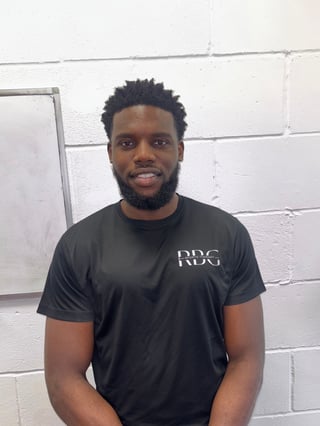
Ryan
Sports Therapist · BSc (Hons) Sports Therapy
"Ankle injuries are often underestimated. People are told to rest, the swelling goes down, and they assume it's healed — but the ankle hasn't regained the strength, balance, or reactive control it needs. That's when problems become chronic. My goal is to make sure your ankle is not just pain-free but genuinely ready for whatever you want to do — whether that's running, football, lifting, or just walking confidently on uneven ground."
Ankle Pain — Frequently Asked Questions
I keep rolling my ankle — can sports therapy help?+
Yes — and this is one of the most common issues we see at our Beckenham clinic. Recurrent ankle sprains are often a sign that the ankle never fully rehabilitated after the initial injury. When you sprain an ankle, the ligaments are stretched and the proprioceptors (the nerve sensors that tell your brain where your ankle is in space) are damaged. Without proper rehabilitation, your ankle loses its ability to react quickly to uneven surfaces, making it prone to rolling again. Our rehabilitation programmes specifically target proprioception, balance, and the strength of the muscles that stabilise the ankle — addressing the reason you keep rolling it rather than just treating each sprain as it happens.
How long does ankle rehabilitation take?+
The timeline depends on the severity and nature of your ankle issue. A mild sprain may respond well within 2-4 weeks of targeted rehab. More significant injuries, chronic instability, or post-surgical rehabilitation may require a longer programme. What's important is that you don't rush back to activity before your ankle is ready — returning too soon is the most common reason ankle problems become chronic. Ryan will give you clear milestones and progression criteria so you'll know exactly when you're ready to return to sport or exercise.
Can you help with Achilles tendon problems?+
Yes — Achilles tendinopathy is one of the conditions we treat most frequently, especially in runners and athletes. The key to successful Achilles rehabilitation is understanding whether the tendon issue is in the mid-portion or the insertion (where it attaches to the heel), as these require different approaches. We use a combination of hands-on treatment to reduce pain and improve tissue quality, progressive loading exercises to strengthen the tendon, and movement assessment to identify and correct any biomechanical factors (foot mechanics, calf strength imbalances, training errors) that contributed to the problem.
I had an ankle injury months ago but it still doesn't feel right — why?+
This is a very common presentation and it usually comes down to incomplete rehabilitation. After the initial pain and swelling of an ankle injury settles, the ankle often appears 'healed' — but the strength deficits, proprioceptive loss, and movement compensations that developed during the injury period remain. You may have lost range of motion without realising it, or your body may have developed subtle movement patterns to protect the ankle that are now causing issues elsewhere. A thorough assessment can identify exactly what hasn't fully recovered and build a plan to address it.
Do I need an X-ray or scan for my ankle pain?+
Not necessarily. Many ankle issues can be accurately diagnosed through a detailed physical assessment. If Ryan suspects a fracture, complete tendon rupture, or other issue requiring imaging, he'll advise you on the appropriate route. However, most ankle sprains, tendon issues, and chronic instability problems don't require imaging and can be effectively assessed and treated based on physical examination findings.
Ready to Fix Your Ankle for Good?
If you're tired of an ankle that holds you back — whether it's a recent injury, chronic instability, or pain that won't go away — book your assessment at our Beckenham clinic today. Let's get you back to moving with confidence.